
How Often Should You Clean a Litter Box?
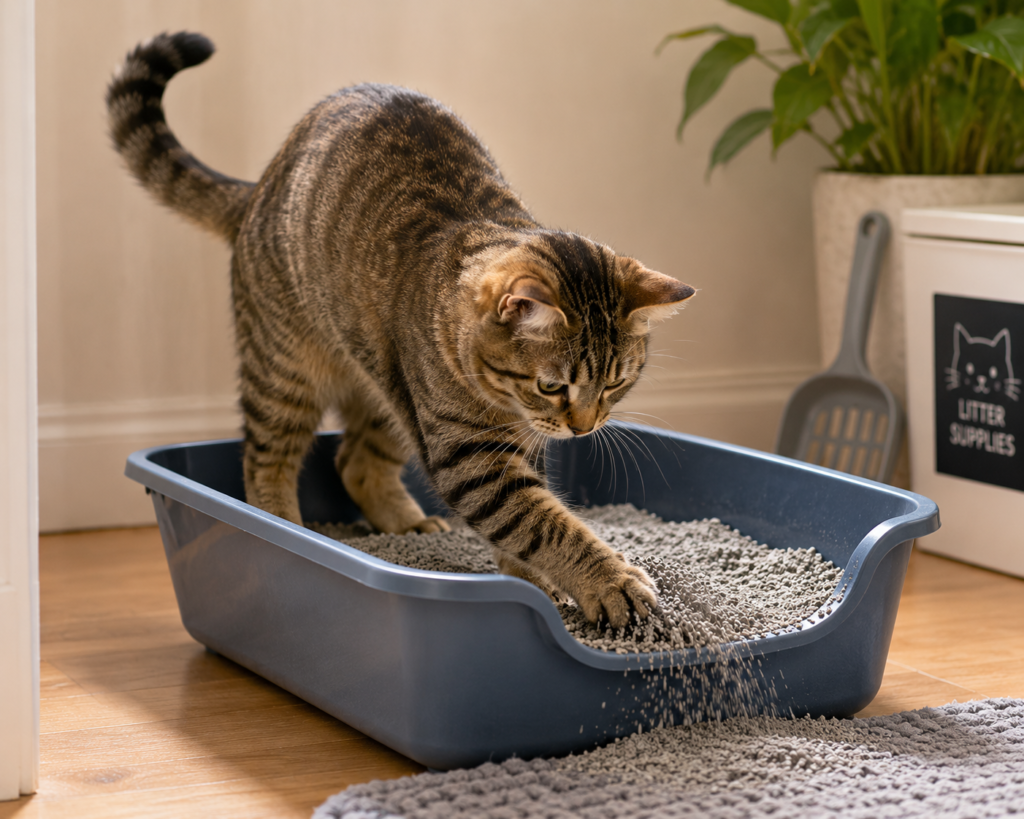
A clean litter box is less about achieving a perfect schedule and more about preventing waste, odour and unpleasant substrate from building up. Most households benefit from scooping at least daily and adjusting the routine to the number of cats, box size and litter type.
Scoop at least once a day
Removing urine clumps and faeces daily keeps the remaining litter cleaner and makes it easier to notice changes in urine or stool. In busy multi-cat boxes, twice-daily scooping can be more realistic.
Top up litter as needed
After scooping, maintain enough depth for comfortable digging without filling the box so deeply that litter is constantly kicked out. The ideal depth varies with litter type and the cat’s preference.
Do a full clean before residue builds up
The interval depends on whether you use clumping, non-clumping or other litter. Empty the box, wash it with a mild unscented cleaner, rinse thoroughly and dry it before refilling. Strong fragrances can be unpleasant to cats.
Multi-cat homes need more capacity
More cats generally mean more boxes and more frequent maintenance. Providing multiple boxes reduces competition and prevents one heavily used tray from becoming the only option.
Watch what the box tells you
Litter maintenance is also a useful health check. Very large urine clumps, repeated small attempts to urinate, diarrhoea, constipation or blood are reasons to seek veterinary advice rather than simply changing the litter.
Replace damaged boxes
Deep scratches can trap residue and odour. If a plastic box remains unpleasant after cleaning or has rough damaged surfaces, replacement may be worthwhile.
Frequently asked questions
Can I use bleach?
Avoid strong-smelling products unless your veterinarian has given specific disinfection instructions. Mild unscented cleaning followed by thorough rinsing is usually more cat-friendly for routine care.
Why does my cat avoid a freshly cleaned box?
Some cats dislike strong scents or sudden substrate changes. Rinse cleaners thoroughly and keep the litter type and depth consistent where possible.
How many litter boxes should I have?
A common starting point is one box per cat plus one extra, adjusted for the home layout and how the cats actually use the resources.