
How to Get Your Cat to Drink More Water: 9 Practical Ideas
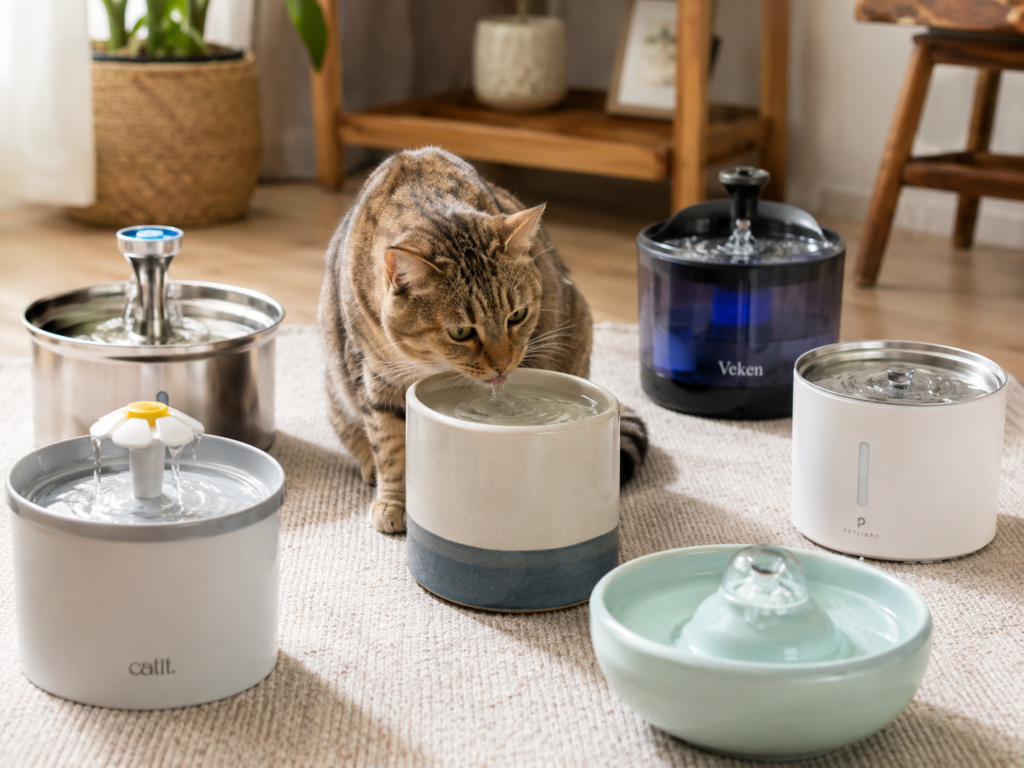
Cats are not always obvious drinkers. Rather than trying to force a cat to drink, it is usually more useful to make water easier to find, more appealing and more compatible with the way that particular cat prefers to eat and drink.
Offer more than one water station
Place fresh water in quiet locations the cat already uses. Multiple stations are particularly useful in multi-level homes and multi-cat households, where one animal may otherwise block access.
Try a wide, shallow bowl
Some cats dislike having their whiskers repeatedly brush the sides of a narrow bowl. Wide ceramic, glass or stainless-steel bowls are easy to clean and give you a simple variable to test.
Move water away from litter and busy areas
Cats can be selective about where they drink. A calm location away from litter trays, noisy appliances and foot traffic may be more appealing than the most convenient corner for humans.
Consider moving water
A fountain can be useful for cats that show interest in taps or running water. Choose one based on cleaning effort, replacement-filter cost, noise, capacity and the availability of replacement parts rather than appearance alone.
Use food moisture when appropriate
Wet food contains substantially more moisture than dry food. If changing diet is appropriate for your cat, food moisture can contribute to daily fluid intake; discuss significant diet changes with a veterinarian, especially for cats with medical conditions or prescription diets.
Keep it fresh and observe changes
Wash bowls and fountain components regularly and replace stale or contaminated water. A sudden major change in thirst can be medically important, so seek veterinary advice if drinking changes markedly or you are worried about dehydration.
Bottom line
The useful question is not simply “what do cats usually do?” but “what does this individual cat need in this environment?” Use the guide as a structured starting point, change one important variable at a time, and pay attention to the cat’s response.
Practical checklist
- Offer more than one water station: use the section above as the practical check before changing the setup.
- Try a wide, shallow bowl: use the section above as the practical check before changing the setup.
- Move water away from litter and busy areas: use the section above as the practical check before changing the setup.
- Consider moving water: use the section above as the practical check before changing the setup.
Frequently asked questions
Which water fountain is best?
There is no useful answer without a use case. Start with the criteria in this guide, remove products that fail a non-negotiable requirement, then compare the remaining options on total cost, maintenance and suitability for your cat. A product can be excellent and still be the wrong choice for a particular household.
How much should I spend?
Spend enough to solve the actual problem reliably, not enough to buy every feature. For products with filters, batteries or replacement parts, compare ongoing costs as well as the purchase price. A simpler item with replaceable components can be better value than a cheaper disposable design.
Should I rely on online ratings?
Ratings can reveal recurring problems, but they should be one input rather than the ranking method. Look for repeated comments about durability, cleaning, sizing and failure modes, then compare those comments with specifications and, where available, hands-on testing.