
Why Do Cats Get the Zoomies? What the Sudden Sprinting Means
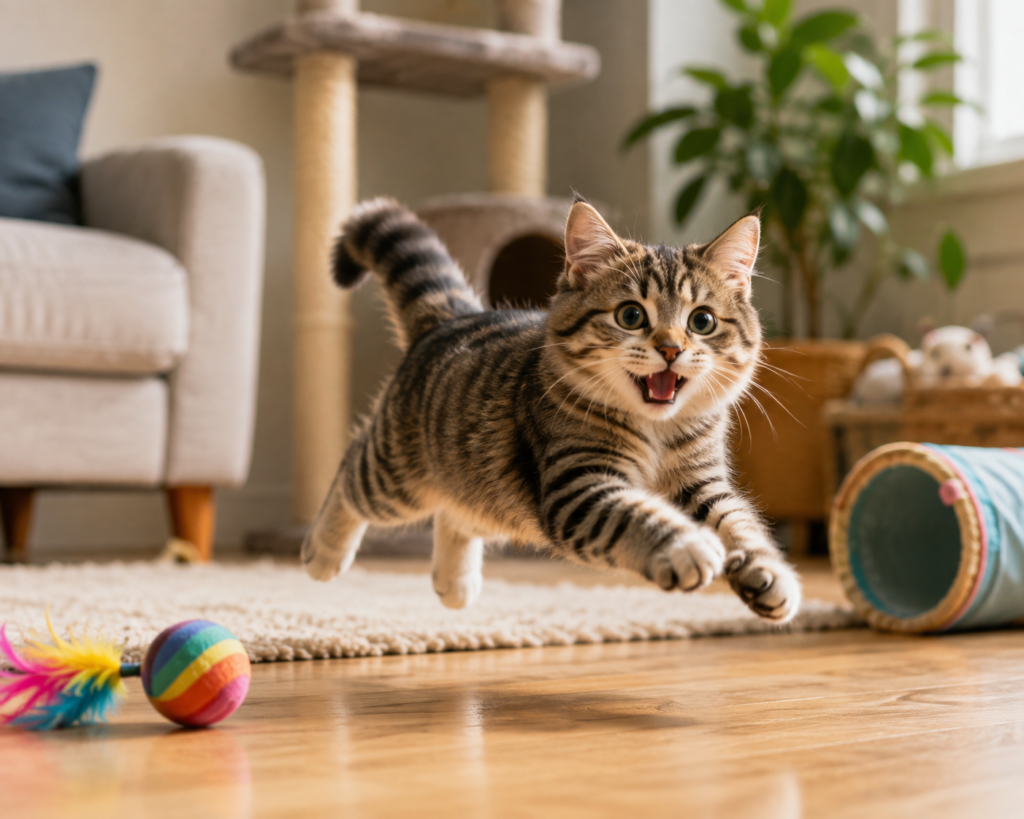
One moment the house is quiet; the next, a cat is performing a high-speed circuit involving the hallway, sofa and one inexplicable wall. These bursts are commonly called zoomies and are usually a normal expression of energy and arousal.
Stored energy needs an outlet
Cats spend large parts of the day resting. A short burst of sprinting can be a simple way to discharge energy, particularly in young or highly playful cats.
Dawn and dusk can be busy times
Cats are often most active around low-light periods. Indoor schedules can shift that activity into the evening or early morning, which is why humans sometimes experience the zoomies as a 2 a.m. event.
Toileting can trigger a burst
Some cats sprint after using the litter tray. The exact reason varies and may simply be arousal or a learned routine. Pain, straining or frequent urgent trips are different and should be assessed by a veterinarian.
Play can reduce inconvenient timing
A structured interactive play session before the household settles for the night can give a cat a more appropriate outlet. Follow the cat’s interest rather than exhausting or overstimulating them.
Changes matter more than the behaviour itself
Normal zoomies are brief and the cat returns to baseline. A sudden major change in activity combined with distress, disorientation, pain or other symptoms deserves professional advice.
Bottom line
The useful question is not simply “what do cats usually do?” but “what does this individual cat need in this environment?” Use the guide as a structured starting point, change one important variable at a time, and pay attention to the cat’s response.
Practical checklist
- Stored energy needs an outlet: use the section above as the practical check before changing the setup.
- Dawn and dusk can be busy times: use the section above as the practical check before changing the setup.
- Toileting can trigger a burst: use the section above as the practical check before changing the setup.
- Play can reduce inconvenient timing: use the section above as the practical check before changing the setup.
Frequently asked questions
How quickly should I expect a change?
Cat behaviour is rarely controlled by a stopwatch. Make one sensible change, keep the environment predictable and watch appetite, toileting, play, sleep and body language over time. If the change itself causes distress, scale it back rather than forcing progress.
Do I need to buy something to fix this?
Often, no. Placement, routine, access, predictability and the way an existing resource is used can matter more than buying another product. Buy only when a new item solves a clearly identified limitation in the current setup.
When should I get professional advice?
Seek veterinary advice when behaviour changes suddenly, appears painful, affects eating or toileting, or is accompanied by other physical signs. For persistent non-medical behaviour problems, a veterinarian can also help rule out health causes before behaviour work begins.